Difference between revisions of "Dependencies"
Jump to navigation
Jump to search
| Line 29: | Line 29: | ||
=== Handling Dependencies === | === Handling Dependencies === | ||
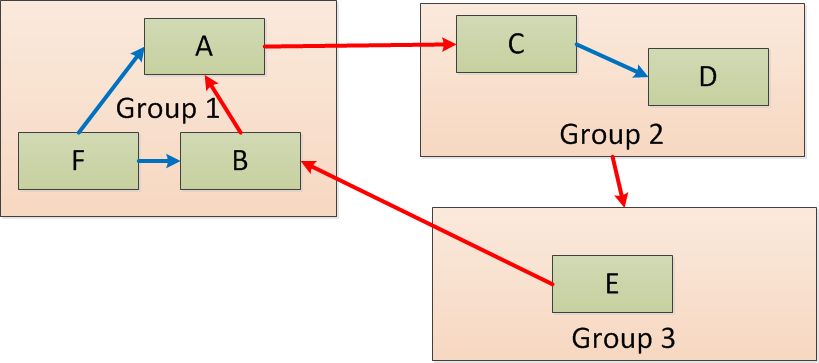
| + | [[File:dependency_cycle_grp.png|right|Complex dependencies with group dependency and cycle]] | ||
* '''Execution Readiness''': When a task has multiple dependencies, it will only become executable when the last required task is completed. | * '''Execution Readiness''': When a task has multiple dependencies, it will only become executable when the last required task is completed. | ||
* '''Dynamic Processing''': The system continuously evaluates dependency resolution during execution, dynamically adjusting the order of tasks as dependencies are met. | * '''Dynamic Processing''': The system continuously evaluates dependency resolution during execution, dynamically adjusting the order of tasks as dependencies are met. | ||
| Line 37: | Line 38: | ||
* '''Resource Allocation''': The system balances task execution based on server resources, ensuring dependencies do not cause performance bottlenecks. | * '''Resource Allocation''': The system balances task execution based on server resources, ensuring dependencies do not cause performance bottlenecks. | ||
By managing dependencies effectively, the system ensures seamless processing while maintaining data integrity and optimal resource utilization. | By managing dependencies effectively, the system ensures seamless processing while maintaining data integrity and optimal resource utilization. | ||
| − | |||
Latest revision as of 14:33, 25 March 2025
Contents
Task Dependencies in Processing

In task processing, dependencies define the execution order of tasks. A task can only start after all its dependent tasks have been successfully completed. This ensures data consistency and prevents errors caused by incomplete or missing data.
Types of Dependencies

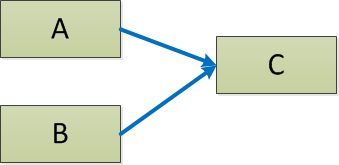
- Direct Dependency
- A task can be directly dependent on one or more preceding tasks
- The task will only begin execution once all dependencies have been completed successfully
- Group Dependency
- A task can depend on an entire group of tasks.
- The task will start only after all tasks within the group have been completed.
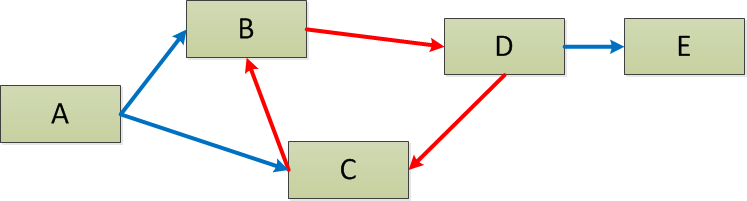
- Cascading Dependencies
- A task may be indirectly dependent on other tasks through a chain of dependencies.
- The system resolves dependencies recursively, ensuring that execution proceeds in the correct order.
Handling Dependencies

- Execution Readiness: When a task has multiple dependencies, it will only become executable when the last required task is completed.
- Dynamic Processing: The system continuously evaluates dependency resolution during execution, dynamically adjusting the order of tasks as dependencies are met.
- Error Handling: If a dependency fails, the dependent task will not execute. The system may offer automatic retry mechanisms or require manual intervention to resolve failures.
Optimizing Dependency Management
- Parallel Execution: Where possible, tasks without dependencies can be executed simultaneously to improve processing efficiency.
- Priority Inheritance: If a high-priority task depends on lower-priority tasks, priority inheritance ensures that all related tasks are prioritized appropriately.
- Resource Allocation: The system balances task execution based on server resources, ensuring dependencies do not cause performance bottlenecks.
By managing dependencies effectively, the system ensures seamless processing while maintaining data integrity and optimal resource utilization.
